The ending of Naguib Mahfouz’s novel, Palace Walk, shows one of the main characters opening himself up to the reader. Like an oyster, he opened his strong shell to expose his soft inside. Throughout the entire novel, al-Sayyid Ahmad plays the tough dictatorial father who allows no questioning of his authority, and does whatever he pleases whenever he pleases. But in a dramatic change of events, Ahmad reveals that he isn’t only the strict tyrant that he is perceived to be, he is a delicate, innocent person who, like most other on this world, is torn apart after finding out terrible news about one of his children.
“The young man said with obvious sorrow, 'We are sad to inform you of the death of our brother freedom fighter Fahmy Ahmad… (495)'” Ahmad learns that his son Fahmy just died during a peace rally. He asks the soldiers many questions and among them is a comment which shows Ahmad's ignorance. Ahmad thinks that this was Fahmy's first rally against the war, well it wasn't. Fahmy had gone behind his father's back and attended other rallies before. He must have thought of the saying, “What daddy don't know, wont hurt him.” Well that didn't, but Fahmy's death did. And with Fahmy also died the tyrannical Ahmad that Mahfouz portrayed throughout the novel. Like Daniela mentioned in her blog, Hiding Behind the Wall, “...[H]e was too sensitive, he acted so rough with them to protect himself from being hurt by them.” She is talking about how he acts with his daughters, and this also applies to his sons. But after Fahmy died, he can't be tough on him anymore, and there is no more act.
Like previously mentioned, Ahmad wasn't the nicest guy in the world. He wasn't faithful either to his wife or his religion, he was mean spirited, and he obviously wasn't a good role model, but an even like the death of your child, that can really turn a person around. I'll sidetrack to my personal life briefly. Whenever my mother hears a story about how someone's son died, she says, “Ay no! Yo no podria vivir sabiendo que se me murio un hijo.” With that, she summarizes some of the feelings that Ahmad is having. He could not live knowing that one of his children died. No one can truly feel what Ahmad feels unless they are a parent themselves.
And Ahmad learned a lesson that any other parent in this situation would learn. As I believe Johnathan tries to get at in his blog Father's and Children's Relationships, he learns what the role of being a father is. The death of Fahmy is going to bring him closer to his remaining children.
Fahmy is now dead, but he left an inheritance of lessons for his family, and the first one to get his share, Ahmad, learned quickly, and changed his ways.
Works Cited
Mahfouz, Naguib. Palace Walk (Cairo Trilogy). New York: Anchor, 1990.
Showing posts with label Children. Show all posts
Showing posts with label Children. Show all posts
Thursday, April 1, 2010


Tuesday, February 23, 2010
Two Mothers, One Feeling.
“All she heard was the movement of people rising and then the sound of kisses and a hum of farewells. Kamal protested against being forcibly removed and started crying. Now it was her turn to say goodbye to them in an atmosphere fraught with sorrow and foot-dragging. Finally the footsteps went off, leaving her alone and apprehensive.
Amina’s light steps returned. The old lady listened anxiously. Finally she cried out to her, ‘Are you crying? ... What a dunce you are! … Can’t you bear to pass a couple of nights with your mother?’” (311).
A child’s connection to their mother is, for the most part, the greatest connection they’ll ever have with someone. Obviously, having grown in a mother’s womb and having acquired their life thanks to their mother, a child is bound to feel a stronger connection to their mother. In the Islamic world, this is the same. In marriage, motherhood is expected to be the primary concern of a woman. Sure father’s take on the responsibility of guiding their child spiritually and educating them, but the mother is to care for her children at all times. Even as the child grows up, a mother must continue to nurture her child and set an example of obedience to God and to her husband (Uhlman). In Mahfouz’s book, we see a clear connection that Amina has with her children, especially when her children go out to find her while she is at her mother’s house. This also gives us a clear example of a connection that Amina and her own mother share.
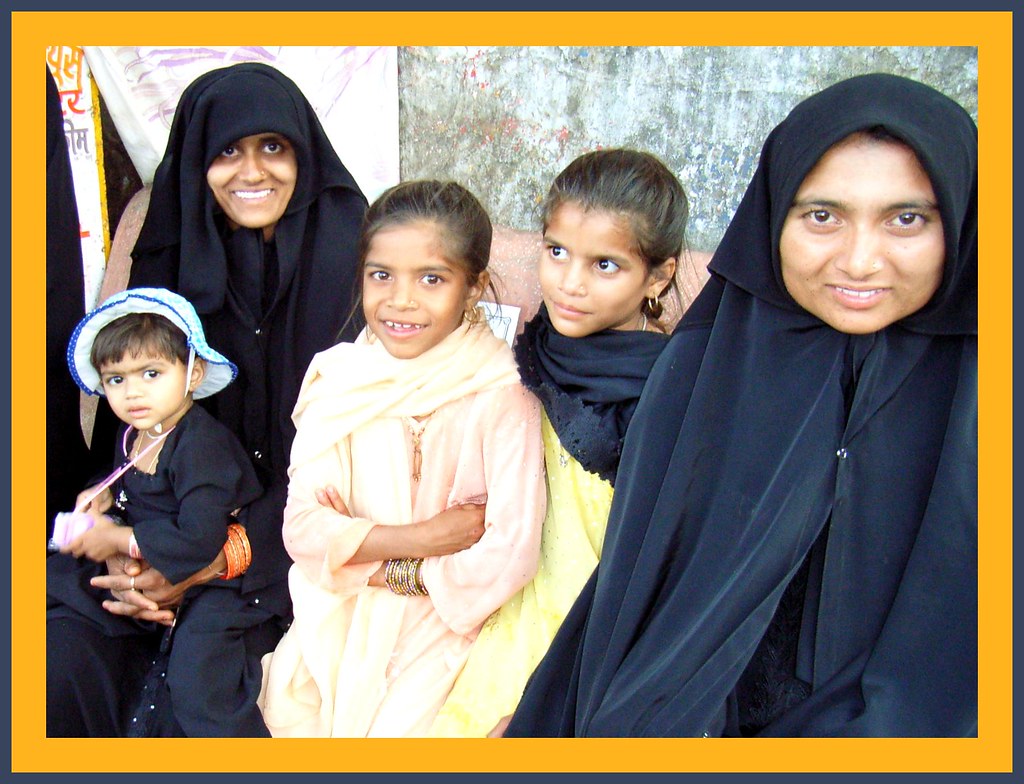
When Amina escapes the rage of her husband, al-Sayyid Ahman, she runs to her mother’s home. Mahfouz describes the two women’s juxtaposition to appear as that of an illustration of an interplay of the “amazing laws of heredity and the inflexible law of time” (203). He says that it’s like looking at the two and seeing the same person except for one is in the present and the other in her future. Yet, their relationship seems like that of a parent and their child – free of judgment and full of advice. Amina’s mother listens, advises, questions, but isn’t quick to judge. She comforts Amina when she says that she misses her children and even allows her to stay with her for the time being. What does this say about the relationship of mother and daughter at this time? It says that the mother is there for their child. She’s there to nurture her child whenever needed. She’s there because she not only cares for her children, but it is her responsibility as a mother.
But, what about Amina? Amina runs away from her family leaving her children behind and although she shows concern on page 203 when she says, “’The only thing that is bothering me is that I’m anxious about my children, Mother,’” her role as a mother is questioned. How is it possible that she was willing to simply leave her children behind? The respect she has as a mother is lowered through this act. But, towards the end of the chapter, we see something that changes this all. When Amina’s children visit her and then decide they must go, Amina’s feelings of sadness are expressed. We learn that she is crying at the departure of her sons and the emotional departure of her son, Kamal. It was clearly hard for her, as a mother, to see her son in such agony when departing from her and the fact that Amina cared and expressed her feelings over the matter make Amina’s motherly roles seem strong. The connection she has with her sons seems so strong and real just as a relationship should be.
Amina and her mother both have motherly roles in this section, but towards the end we see something that makes a motherly role all the more evident. Amina’s reaction to the departure of her children affects her relationship with her mother. The fact that Amina feels sorrow for being away from her children rather than feeling joy for being with her mother clearly upsets her mother. But then the question remains, why should her mother be upset about feeling just as horrible as Amina? Does she not understand that Amina is going through something similar? Is she putting her happiness before her child’s?
Uhlman, Kristine. "Overview Of Shari’a and Prevalent Customs In Islamic Societies - Divorce and Child Custody." 2004. ExpertLaw.com. 21 February 2010 < http://www.expertlaw.com/library/family_law/islamic_custody-3.html#100 >.
Subscribe to:
Posts (Atom)
