Throughout Naquib Mahfouz’s Palace Walk, we are introduced to a number of different characters that represent a different aspect of life in Egypt. But, amongst the many different characters Mahfouz introduced, one stood out – Al-Sayyid Ahmad Abd al-Jawad. In part II of Abu Talut’s article, “The Status of Women and Men in Islam,” the responsibility of a man is great when it comes to maintenance and protection of his family (Talut, II). Al-Sayyid Ahmad represents a Muslim man who, at times, is overprotective towards the women in his family, controlling of everyone and everything around him, and experienced in forbidden pleasures like extramarital affairs. But, throughout the novel we learn that he worries mainly about his social appearance rather than what is best for his family. Through this all, Mahfouz shows us a transformation in Al-Sayyid Ahmad’s behavior as the novel progresses and by the end of the book, we see a side of Ahmad that we had yet to see throughout the novel.
At the beginning of the novel, we see Al-Sayyid’s wife, Amina waiting on her husband to arrive after a night out with friends. She weighs on him hand and foot, removing his cloak, loosening his sash, removing his shoes and socks, pouring water for him to wash his face, and just sits around waiting for him to tell her what to do or giving her permission to speak. Mahfouz described Ahmad’s attitude towards this when he wrote, “Her husband spared no effort to safeguard his dignity and authority” (10). This made it apparent that he made it obvious that he was the one who held the authority in the marriage – something that is apparent in Muslim marriages. But, we also see that Ahmad cares more about his appearance outside of the home and puts in as much effort as possible into his outside relationships rather than those that should be most important, being his family’s. According to Talut’s article, this is not the responsibility of a man. Ahmad’s desire to seem perfect and powerful in public isn’t his responsibility, his responsibility is to protect his family and do what is best for them, not him (Talut, II). This strengthens the idea that Ahmad is selfish and careless with the relationship between him and his family.
As the novel progresses, we see Ahmad dismiss the idea of Amina marrying the man she loves clearly because he is afraid of what people may say about the engagement since no man had ever seen his daughters. He was worried about what people would say about this rather than his daughter’s happiness. As Daniela said in her blog, “Worshipper Blinded by Love and Fear” Ahmad’s family treats Ahmad as if he were a God. She gives the example of Aisha’s feelings towards Ahmad after she’s told that she cannot marry. It is clear that Aisha is upset, but Aisha couldn’t bring herself to stand up to her father. In Talut’s article, he writes that a man’s responsibility is also to protect and defend a woman and to make his family feel safe and secure (Talut, II). It may seem that Ahmad is protecting his daughter but in reality, he’s simply protecting his image and by putting fear into his family, he is doing something that he shouldn’t do – especially if he expects to create a safe environment for his family.
Later in the book, at the beginning of Chapter 65, we see the beginning of Ahmad’s transformation. Mahfouz shows us how Ahmad reacts when he sees two British soldiers approaching him and describes his reaction by saying, “With a pounding heart and a dry throat, al-Sayid Ahmad watched the soldier approach” (442). This clearly means that Ahmad was scared. Anyone else would be scared by a man in a uniform, fully armed, and physically strong, but if Ahmad was so “God-like” why wouldn’t he be scared? God’s are usually all powerful and nothing frightens them. Seeing how Ahmad could do nothing to communicate with the foreign soldiers and get himself out of the mess made Ahmad look just as inferior as everyone else. He was no longer giving orders to everyone, he was the one taking orders. Mahfouz also shows us how Ahmad begins to care for his family as he thinks about never seeing them again when he writes, “When he [Ahmad] remembered his family, he felt such painful homesickness that tears almost came to his eyes” (445). By doing this, Mahfouz reveals part of Ahmad’s transformation in which he is no longer the “God” he was once portrayed as. He shows Ahmad finally worrying about the future of his family and how their lives will be after he is gone seeing as how he is the one that is responsible for their well being. But, he is now also shown just like any other citizen who has to give in to someone else’s commands and has to endure the possibility of possibly never seeing his loved ones again.
By the end of the book, we are introduced to a completely different Ahmad than we first were at the beginning. The death of his son, Fahmy brought forth a surprising reaction from Ahmad. At the beginning of the novel, we saw Ahmad as a man who cared solely of himself and how he was viewed. As LaurenF wrote in the blog named, “ Ahmad’s Priorities ,” Ahmad didn’t care about his relationship with his family as much as he cared about his relationship with others and his image in the eyes of the public. He did what he wanted and was content with the happiness of others rather than that of his family. But, when Fahmy is killed during a demonstration, we see Ahmad breaks down. We see him finally thinking about how his family, Amina, will take the news. We see his pain on page 495, when he replies to the young man offering his condolences to him by saying, “…Dead! I’ll never see him again at home or anywhere else on the face of the earth? How can I have a home without him? How can I be a father if he’s gone? What has become of all the hopes attached to him? The only hope left is patience…. Patience? Oh…. Do you feel the searing pain? This really is pain. You were mistaken previously when you claimed to be in pain. No, before today you’ve never known pain. This is pain…” (495-496). This was the first time Ahmad showed such vulnerability. It was the first time that he showed his pain and emotions to a complete stranger. Even more shocking was how, on page 497, he started thinking of how Amina would take the news of Fahmy’s death. Mahfouz writes, “He remembered Amina for the first time and his feet almost failed him. What could he say to her? How would she take the news? She was weak and delicate. She wept at the death of a sparrow” (497) informing the reader of Ahmad’s first realization of how Amina would feel about what had happened. For the first time, Ahmad actually worried about someone other than himself and accepting the responsibility he has as a father and husband.
Naguib Mahfouz’s novel showed the transformation that one person can undergo as a result of specific events. Ahmad’s transition in the book was clear and surprising. It was evident that Ahmad had undergone such a huge change, but it was surprising that he did and in the manner that it happened. Ahmad didn’t seem as superior to the others as he once did and as the novel came to an end, we saw how Ahmad went from caring solely of himself and his image in the eyes of others to worrying about the feelings of others, being able to express his vulnerability to strangers, and finally acknowledging the responsibility he had as a father and husband.
Works Cited
Daniela. "Worshipper Blinded by Love and Fear." Web log post. Diggingevendeeper.blogspot.com. The Chinquapin School, 17 Feb. 2010. Web. 22 Mar. 2010. < http://diggingevendeeper.blogspot.com/2010/02/worshipper-blinded-by-love-and-fear_17.html >.
LaurenF. "Ahmad's Priorities." Web log post. Diggingevendeeper.blogspot.com. The Chinquapin School, 10 Feb. 2010. Web. 22 Mar. 2010. < http://diggingevendeeper.blogspot.com/2010/02/passage- >.
Mahfouz, Naguib. Palace Walk. New York: Anchor Books, 1991
Talut, Abu. "The Status of Women and Men in Islam II." 28 April 1998. 02 April 2010 < http://www.iol.ie/~afifi/BICNews/AbuTalut/AbuTalut5.htm >.
Showing posts with label Modern Masters. Show all posts
Showing posts with label Modern Masters. Show all posts
Tuesday, April 6, 2010


Sunday, March 7, 2010
It's NOT love
“He glanced at Zaynab. He found her examining his face with a look that seemed to say resentfully, ‘Why are you so inattentive? Why are you so glum? Doesn’t my presence cheer you up at all?’ Yasin felt her resentment in the fleeting moment their eyes met, but he did not respond to her sorrowful criticism. To the contrary, it annoyed and riled him. Yes, he disliked nothing so much as being forced to spend a whole evening with her, deprived of desire, pleasure, and the intoxication on which he relied to endure married life.
He began to look at her stealthily and wonder in amazement, ‘Isn’t she the same woman? . . . Isn’t she the one who captured my heart on our wedding night? . . . Isn’t she the one who drove me wild with passion for nights and weeks on end? . . . Why doesn’t she stir me at all? What has come over her? Why am I so restless, disgruntled, and bored, finding nothing in her beauty or culture to tempt me to postpone getting drunk?’” (378)
Naguib Mahfouz demonstrates the loss of love in a marriage in his novel, Palace Walk. Yasin and Zaynab’s relationship is clearly at a loss of love in this section of the novel. Yasin has become “bored” of his relationship and no longer looks at his wife for pleasure. But, why could this be? Could this be that Yasin has just grown tired of his wife? Could it be because he feels no connection to her? Could this be a result of an arranged marriage? Does this tend to happen in all arranged marriages? Are they an exception to the so called, “success” of arranged marriages?
Yasin and Zayanab’s marriage was a customary arranged marriage and, at first, Yasin was quite enthusiastic. But, as the novel progresses, we see that Yasin loses interest in his wife, Zayanab. On page 378, we see that he begins to question his feelings and why he no longer feels the same way for her that he once did. According to Dictionary.com, the word “lust” means, Intense or unrestrained sexual craving, an overwhelming desire or craving, a lust for power, or an intense eagerness or enthusiasm. This definition allows me to assume that the feelings that Yasin once had for his wife weren’t any sort of love feelings, but feelings of lust. The eagerness that Yasin had to marry and his raging hormones caused for him to marry someone who he wouldn’t be very happy with as time progressed. In Dee’s blog, “Yasin has gone crazy!” she explains the attitude that Yasin has towards women and how the Lust he has for them came to be.
In my research, I found that countries that practice arranged marriages have higher success rates than those countries that don’t. One thing that the author wrote was that the reason that most marriages that aren’t arranged fail is that the couple bases their decision to marry on the belief that love will conquer all and that everything will be okay just as long as they’re in love, but when push comes to shove, love isn’t everything and their marriage ends up failing (Seabastian). But, what about Yasin and Zaynab’s marriage? It was arranged and had nothing to do with love yet it is still coming apart. Could it be that Yasin just wants to be with more than one woman? Or, could it be that he wants love and not just lust? Yasin and Zaynab's marriage is an example of how arranged marriages aren’t always as successful as people make them seem. Sure, some learn how to deal with one another without being in love, but some don’t and what happens then? Is it okay for Zaynab to leave or should she stay in a marriage where she’s not happy simply because it’s the “right” thing to do in her society?
Bibliography
Dee. "Yasin has gone crazy!" 17 February 2010. diggingevendeeper.blogspot.com. 04 March 2010.
Mahfouz, Naguib. Palace Walk. New York: Anchor Books, 1991.
Seabastian. "Arranged Marriages - Past and Present 78." February 2010. HubPages.com. 4 March 2010.
He began to look at her stealthily and wonder in amazement, ‘Isn’t she the same woman? . . . Isn’t she the one who captured my heart on our wedding night? . . . Isn’t she the one who drove me wild with passion for nights and weeks on end? . . . Why doesn’t she stir me at all? What has come over her? Why am I so restless, disgruntled, and bored, finding nothing in her beauty or culture to tempt me to postpone getting drunk?’” (378)
Naguib Mahfouz demonstrates the loss of love in a marriage in his novel, Palace Walk. Yasin and Zaynab’s relationship is clearly at a loss of love in this section of the novel. Yasin has become “bored” of his relationship and no longer looks at his wife for pleasure. But, why could this be? Could this be that Yasin has just grown tired of his wife? Could it be because he feels no connection to her? Could this be a result of an arranged marriage? Does this tend to happen in all arranged marriages? Are they an exception to the so called, “success” of arranged marriages?
Yasin and Zayanab’s marriage was a customary arranged marriage and, at first, Yasin was quite enthusiastic. But, as the novel progresses, we see that Yasin loses interest in his wife, Zayanab. On page 378, we see that he begins to question his feelings and why he no longer feels the same way for her that he once did. According to Dictionary.com, the word “lust” means, Intense or unrestrained sexual craving, an overwhelming desire or craving, a lust for power, or an intense eagerness or enthusiasm. This definition allows me to assume that the feelings that Yasin once had for his wife weren’t any sort of love feelings, but feelings of lust. The eagerness that Yasin had to marry and his raging hormones caused for him to marry someone who he wouldn’t be very happy with as time progressed. In Dee’s blog, “Yasin has gone crazy!” she explains the attitude that Yasin has towards women and how the Lust he has for them came to be.
In my research, I found that countries that practice arranged marriages have higher success rates than those countries that don’t. One thing that the author wrote was that the reason that most marriages that aren’t arranged fail is that the couple bases their decision to marry on the belief that love will conquer all and that everything will be okay just as long as they’re in love, but when push comes to shove, love isn’t everything and their marriage ends up failing (Seabastian). But, what about Yasin and Zaynab’s marriage? It was arranged and had nothing to do with love yet it is still coming apart. Could it be that Yasin just wants to be with more than one woman? Or, could it be that he wants love and not just lust? Yasin and Zaynab's marriage is an example of how arranged marriages aren’t always as successful as people make them seem. Sure, some learn how to deal with one another without being in love, but some don’t and what happens then? Is it okay for Zaynab to leave or should she stay in a marriage where she’s not happy simply because it’s the “right” thing to do in her society?
Bibliography
Dee. "Yasin has gone crazy!" 17 February 2010. diggingevendeeper.blogspot.com. 04 March 2010
Mahfouz, Naguib. Palace Walk. New York: Anchor Books, 1991.
Seabastian. "Arranged Marriages - Past and Present 78." February 2010. HubPages.com. 4 March 2010
Tuesday, February 23, 2010
Two Mothers, One Feeling.
“All she heard was the movement of people rising and then the sound of kisses and a hum of farewells. Kamal protested against being forcibly removed and started crying. Now it was her turn to say goodbye to them in an atmosphere fraught with sorrow and foot-dragging. Finally the footsteps went off, leaving her alone and apprehensive.
Amina’s light steps returned. The old lady listened anxiously. Finally she cried out to her, ‘Are you crying? ... What a dunce you are! … Can’t you bear to pass a couple of nights with your mother?’” (311).
A child’s connection to their mother is, for the most part, the greatest connection they’ll ever have with someone. Obviously, having grown in a mother’s womb and having acquired their life thanks to their mother, a child is bound to feel a stronger connection to their mother. In the Islamic world, this is the same. In marriage, motherhood is expected to be the primary concern of a woman. Sure father’s take on the responsibility of guiding their child spiritually and educating them, but the mother is to care for her children at all times. Even as the child grows up, a mother must continue to nurture her child and set an example of obedience to God and to her husband (Uhlman). In Mahfouz’s book, we see a clear connection that Amina has with her children, especially when her children go out to find her while she is at her mother’s house. This also gives us a clear example of a connection that Amina and her own mother share.
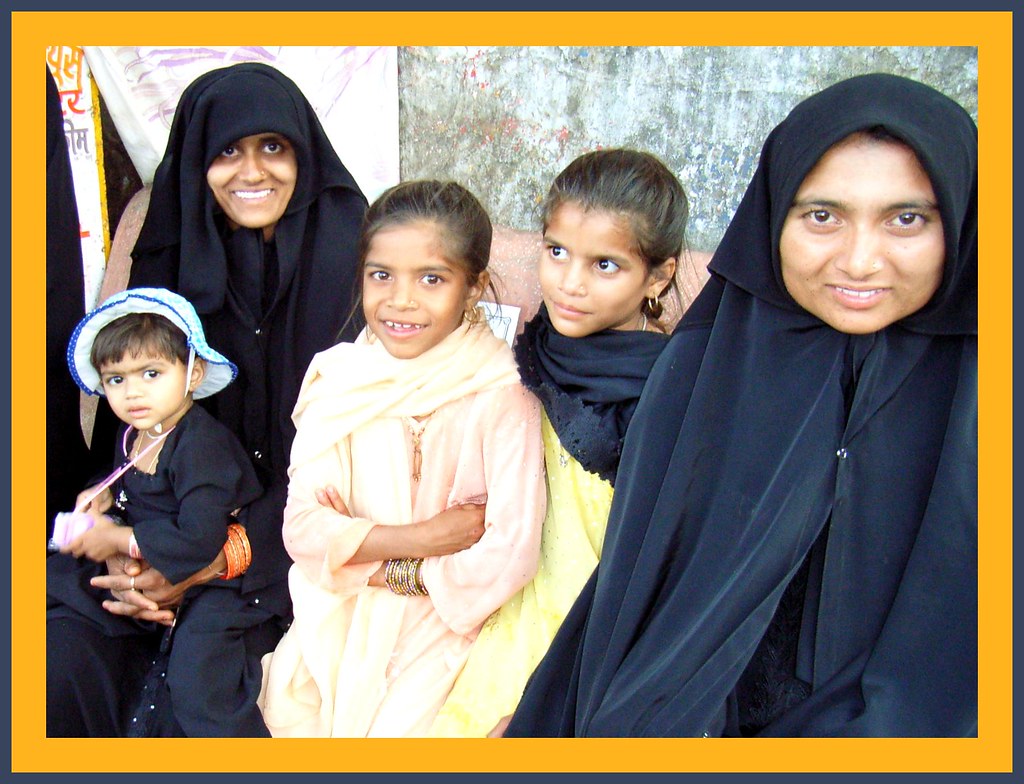
When Amina escapes the rage of her husband, al-Sayyid Ahman, she runs to her mother’s home. Mahfouz describes the two women’s juxtaposition to appear as that of an illustration of an interplay of the “amazing laws of heredity and the inflexible law of time” (203). He says that it’s like looking at the two and seeing the same person except for one is in the present and the other in her future. Yet, their relationship seems like that of a parent and their child – free of judgment and full of advice. Amina’s mother listens, advises, questions, but isn’t quick to judge. She comforts Amina when she says that she misses her children and even allows her to stay with her for the time being. What does this say about the relationship of mother and daughter at this time? It says that the mother is there for their child. She’s there to nurture her child whenever needed. She’s there because she not only cares for her children, but it is her responsibility as a mother.
But, what about Amina? Amina runs away from her family leaving her children behind and although she shows concern on page 203 when she says, “’The only thing that is bothering me is that I’m anxious about my children, Mother,’” her role as a mother is questioned. How is it possible that she was willing to simply leave her children behind? The respect she has as a mother is lowered through this act. But, towards the end of the chapter, we see something that changes this all. When Amina’s children visit her and then decide they must go, Amina’s feelings of sadness are expressed. We learn that she is crying at the departure of her sons and the emotional departure of her son, Kamal. It was clearly hard for her, as a mother, to see her son in such agony when departing from her and the fact that Amina cared and expressed her feelings over the matter make Amina’s motherly roles seem strong. The connection she has with her sons seems so strong and real just as a relationship should be.
Amina and her mother both have motherly roles in this section, but towards the end we see something that makes a motherly role all the more evident. Amina’s reaction to the departure of her children affects her relationship with her mother. The fact that Amina feels sorrow for being away from her children rather than feeling joy for being with her mother clearly upsets her mother. But then the question remains, why should her mother be upset about feeling just as horrible as Amina? Does she not understand that Amina is going through something similar? Is she putting her happiness before her child’s?
Uhlman, Kristine. "Overview Of Shari’a and Prevalent Customs In Islamic Societies - Divorce and Child Custody." 2004. ExpertLaw.com. 21 February 2010 < http://www.expertlaw.com/library/family_law/islamic_custody-3.html#100 >.
Wednesday, February 17, 2010
"...his young heart found hard to bear."
“’Oh…’ He had been having such fun talking and playing that he had almost forgotten the message he had come to deliver. Her question reminded him of his mission. He looked at her with a different eye, an eye that wished to delve deep inside her to learn the secret power that was rocking his fine, sober brother. When he realized that he as the bearer of unhappy news, his inquisitive look disintegrated. He said despondently, ‘Fahmy sent me’” (134-135).
This passage was probably the passage that really hit me the most. In this section, the author of Palace Walk, Naguib Mahfouz, introduces the story of a young boy and girl that are pretty much in love. Although young, Kamal and Maryam are shown to be in the process of falling in love. Mahfouz shows us the process in which the two engage in activities that a couple in a relationship would normally engage in. Through Mahfouz’s writing, we’re able to see that Kamal and Maryam truly care for each other. On page 134, we see how Kamal and Maryam are playful with each other.
“She stretched her hand toward his armpit, but he moved in the opposite direction and crossed his arms over his chest to protect himself. A nervous laugh escaped him, as though her fingers actually were tickling him. . . She raised her hands over her head. His fingers attacked under her arms and proceeded to tickle her as gently and quickly as possible” (134).
This passage clearly demonstrates the playful relationship that Kamal and Maryam had. It shows the affection they had for each other just as it’s shown when Mahfouz writes, “Maryam grasped his chin with her right hand and kissed his lips time and again” (134). The relationship between the two was clear and without a doubt, the feelings were real. But, as soon as Maryam asks Kamal how he was able to get away, we see sadness overcome the two. Kamal’s brother, Fahmy has chosen Maryam for himself and has already asked for permission to become engaged to her. Although permission wasn’t granted because Fahmy had yet to complete his studies, they both know that he intends on engaging her and he’ll, more than likely, succeed.
The fact that arranged marriages occurred in this time period and still do makes me extremely sad. I find it appalling how, in some cases, a couple that is in love and happy can’t stay together simply because another man has claimed her to be his first. Obviously, since I was born and raised in the United States with different customs and beliefs than those in the book, I find this very heartbreaking. But, I’m forced to read this in the eyes of the people with the customs and beliefs that are completely different than mine. To them, this is how things are supposed to go. A man finds a woman that he finds useful or “good enough” to be his wife, he asks for permission to become engaged and married, and the woman must obey. It’s how things are. As much as we’d like to go against the way of life of people like this and as much as we’d like to tell them how this is wrong, we shouldn’t. And if we could and DID, it wouldn’t be very effective. To them, we’re wrong and they’re right and there’s not much we can do about it. It is better to not judge for the sake of not being harshly judged in returned.
Wednesday, February 10, 2010
What Not to Judge

In Palace Walk, the author, Naguib Mahfouz, introduces Egyptian culture to us, the readers, through very descriptive passages, like this one, in the story of a young girl named, Amina. Through the description of her life as a young married woman, we are exposed to the way women were seen in Egypt at that time. Like many primarily Muslim countries, women are seen as having to be submissive and inferior to men. We clearly see examples of this in the relationship of Amina and her husband, Ahmad Abd al-Jawad.
"She returned to the room, closed the door, and pulled a pallet out from underYoung Amina, having been raised in a culture where women have always been seen as inferior to men, has been serving her husband for a quarter of a century. She has taken good care of her household, her husband, her stepson, Yasin, and her children since the age of 14. As westerners, we might see many objections to this. For example, "why should a young girl be given so much responsibility at such an early age?" or, "why not allow a young person, just because she's a female, choose who she is to marry and how she is to live out her youth?". Although very valid questions, as readers belonging to the western world, we must force ourselves to understand the way of life that women in Egypt had been taught to live.
the bed. She placed it in front of the sofa and sat cross-legged on it. In good
conscience she did not think she had any right to sit beside him. Time passed
without her speaking. She waited until he invited her to speak; then she would"
(9).
While reading this, we, as westerners, may find it ridiculous that a woman has to behave in this way, but to people that share the same beliefs find it completely normal. In his book, Mahfouz described how Amina was terrified of being alone when she first married Mr. Ahmad. She was terrified of demons that might have been in her home while she was alone at night and sought a bit of comfort by going from room to room with her maid and attempt to ward off demons. But, he later tells that she gets accustomed to her new life with the help of her husband’s words.
Mahfouz, as Amina's memory of Mr. Amad's words, writes, "'I'm a man. I'm the one who commands and forbids. I will not accept any criticism of my behavior. All I ask of you is to obey me. Don't force me to discipline you" (4). These words were the words that taught Amina to adapt to her new life. For the next quarter of a century, Amina learned to love her new life. Through his writing, Mahfouz tells us that “she even profoundly loved this hour of waiting up…” (5). By saying this, Mahfouz lets the readers know that although a woman’s life in Egypt may seem wrong to some people, it’s completely normal to others and that some women even loved their way of life.
Although the life of a woman may seem slave-like to people like us who were raised with western mindsets, Mahfouz shows us that the way women in Egypt lived was something completely normal to them and something they even grew to love. It isn’t right for people to judge the lifestyles of others because it’s not our place to do so. We need to respect the lifestyles of others and not judge them simply because we grew up accustomed to a different way of life.
Friday, February 5, 2010
Welcome to Our World
This is the blog of the AP English class at the Chinquapin School. We like to think of ourselves as "modern masters" of writing, and we welcome your ideas and comments as we "dig even deeper" into our reading of true modern masters of world literature. Our first book up for discussion is Palace Walk, the inaugural novel in the The Cairo Trilogy by Nobel Prize winning novelist Naguib Mahfouz, translated by William Maynard Hutchins and Olive E. Kenny, published by Anchor/Random House (New York) in 1990, originally published in 1956.
Subscribe to:
Posts (Atom)
