Friday, September 10, 2010
I've been down this road before.


Wednesday, April 7, 2010
Like Father Like Son
At the beginning of chapter forty six, we get a since that Yasin has changed when the text states, “Yasin...poured himself into marriage with all the energy, enthusiasm, and optimism of a man who imagined he was carrying out the initial steps of a program for carnal enjoyment that would last day after day, month after month, and year after year” (307). From this quote we get a sense of Yasin undergoing change, but in his case, is that possible? Does the way he treat his wife reflect the way that Ahmad treats Amina or furthermore, his mother? When looking at this quote, words that stood out were “poured” and “all”. These words that are used to characterize Yasin and his actions suggest devotion and determination to having a healthy marriage. Growing up, Yasin was forced to experience that divorce of his parents and the way in which his father treated his mother. After observing his parents divorce, Yasin, probably began to see marriage as less than sacred, which was the way in which God intended it to be seen.
After reading an article that talked about genes and the transfer of those genes, I saw that there were studies that suggested that parents may pass onto their children a gene of “indulgence”. I know it may sound a little far fetched, but look at this as if it were any other illness or disorder. In this context, the theory of an indulgence gene is based on the probability or statistic that suggest that it is very likely that children will indulge in some of the same actions and activities as there parents. After reading a little deeper into the novel, the narrator conveys to the reader, “His greedy appetite overcame his hesitation. He put his hand on her waist. Then he pulled her gently toward his breast” (382). If this is true, is not the fact that Yasin is lustful and is an adulterer attributed to his father, Ahmad. If children whose parents are alcoholics and exhibit psychopathic symptoms by chance have the same disorders as their parents, then why couldn't a kid whose parent or parents were adulterers have the same problem?
Growing up, my mother always quoted the King James Version Bible saying, “Train a child in the way he should go, and when he is old he will not turn from it”, an old saying from Proverbs 22:6. If this is true, then how does this relate to this novel? As the head of the household, Ahmad’s responsibility is to raise his son with good intentions and expect that they would, as an adult, carry those traits with him. Near the end of this novel, it is discovered by Ahmad that Fahmy has been involved in demonstrations against the English. At this news, Ahmad becomes furious. But why on earth would Ahmad be angry that Fahmy has become a demonstrator, standing up for what he believes in, beside the fact that he is scared for his son’s life. If Ahmad has done his job as a father, then he should be behind Fahmy, with the knowledge that what he is doing is for a good cause and right.
Taking a look at this novel, Ahmad is seen as a strict and demanding father that does his best to raise his children in the way that they should go. But after raising his children, are they then allowed to think for themselves or are they prisoners to their father's desires? The answer to this may be found in Yesenia Chavez's Disobedient, a blog about Fahmy's actions. After choosing to indulge in demonstrations and is exposed as a Freedom Fighter, the author paints a picture of Fahmy's maturity, stating:
He started to bite his lips to suppress his tears. He felt ashamed at being so weak. When he was finally able to speak, he launched into a rambling plea, because he was deeply moved and wished to conceal his embarrassment: “Forgive me, Papa. I’ll obey every command of yours more than willingly, but I can’t do this. I can’t…I can’t accept shrinking back and abandoning my brothers, and I don’t think you would like me to. There’s no way life would be bearable if I did…What is my life worth?...What is the life of any man worth? Don’t be angry, Papa. Think about what I’m saying….I assure you that there’s no danger in our little, nonviolent job(426).
Does Ahmad want his sons to be men or does he want them to, like a subservient woman, follow his every wish and command without flaw. When looking at this passage, we see Fahmy, as seen in Marcell Johnson's Out With the Old, struggle for independence, though in this instance, he fights within himself and with his father rather than for his people. In this passage the word “can't” strikes me as extreme. When people claims that they can't, it implies that they are physically incapable of executing a task, and as a man, it seems that Fahmy is incapable of terminating his activity in demonstrations. Ahmad's intention was to raise his sons to be their own men and think for themselves, but how is that possible when he constantly shoves his views down their throats.
Josh Billings, a famous humorist writer, once said, “To bring up a child in the way he should go, travel that way yourself once in a while”. Though written by a humorist writer, this quote is very true. It is extremely difficult to raise a child because there are no recipe books on making or molding a child into what it is supposed to be. In the case of Ahmad, how can a man raise sons up to be great when he himself is living a contrary life? As we see from Yasin and Fahmy, children are affected greatly by the actions and lifestyle of their parents.
Mahfouz, Naguib. Palace Walk. New York: Anchor, 1990
Reasons to Believe. Adultery Gene? Feb. 3 2010.
http://www.reasons.org/blogs/joes-corner/adultery-gene
Syed Ahamed. English Translation of the Message of The Quran. Lombard, Illinois: Book of Signs Foundation, 2006.
Johnson, Marcell, “Out With the Old.” Digging Even Deeper. Blogger. March 4, 2010. April 7, 2010.
Chavez, Yesenia, “Disobedient.” Digging Even Deeper. Blogger. March 24, 2010. April 7, 2010.
Wednesday, March 24, 2010
Ahmad never changes
The more I read the book the more Ahmad ceases to amaze me. Since she start of the novel it has seemed that he thinks really highly of himself and only comments on everybody else’s errors. Like Johnathan said on a previous blog, he hates when people lie and when they act in bad ways but he goes around doing the same thing to other people. When Muhammad Iffat goes and visits his shop to request that Yasin and Zaynab be divorced he acts as if it were an impossible request. Muhammad feels that Yasin is unfit to be with his daughter because he goes out partying at night and has intimate relations with the maid of the house. In the entire conversation Ahmad it does not seem that Ahmad agrees with anything that Iffat is talking about. He simply said, “Don’t you see we’re all made of the same stuff, even if the details differ” in other words he pretty much made it okay for all the men in Egypt to behave this way due to their gender. Ahmad has no sense of self-judgment and it seems like he continues to ignore his own actions when he talks to his son, Yasin about the disappointment he has caused. In the quote above Ahmad is making it clear that God is the only one that can forgive him for committing this barbaric action. Now, if Ahmad didn’t truly think this was a bad offense he wouldn’t tell this to Yasin because we all know that Ahmad has intimate relations with other women during his nights out. I still don’t believe that he doesn’t think that he has been a bad influence on Yasin. Ahmad says, “I raised and disciplined you” yes he did but he also left a little trail for Yasin to follow his footsteps and commit the same stupid mistakes like sleeping with other women and being an unfit husband. Ahmad needs to realize that he is responsible for his family’s disgraces. And the sooner he accepts that the better it will be. He will have a chance to mend his errors and try and save his family from committing more mistakes.
Mahfouz, Naguib. Palace Walk (Cairo Trilogy). New York: Anchor, 1990. Print.
Disobedient

Picture taken by Gilzee
Fahmy has been the most responsible of Ahmad’s children. “He was the only one in the family to adopt a skeptical attitude toward incantations, charms, amulets, and the amazing deeds performed by saints” (411). Being the most educated of the family, after Ahmad, Fahmy continues to pursue his beliefs until his life is taken away from him.
Fahmy had never failed to disobey his father’s orders until his patriotism took over him. At different occasions Fahmy tried to seek companionship with his family members, but always failed. He usually tried to share his beliefs and convey his message to his family members during the coffee hour, but his family wasn’t enthusiastic enough. They all believed that the war was important, but their minds were busy with other things. Yasin was busy thinking about women, Kamal with his soldier friends, and his mother trying to figure out what was really going on. Since there was nobody at home to share his thoughts, Fahmy was forced to look elsewhere. He discovered that his classmates were all he had. Fahmy wanted to be with them more than he wanted to be with his own family because he could pursue his faith without being judged.
After being confronted by his father and being told to stop distributing handbills, Fahmy continues to pursue his beliefs at his own will. There was no way he was going to give up what he had started with his classmates and easily give up and please his father by swearing on the Qur’an. Fahmy was never able to discover where he obtained the courage to reply to his father with determination and enthusiasm; “We are all ready to sacrifice ourselves for our country” (422). Amazed by his ability to confront his father, Fahmy gains more courage to continue fighting for what the freedom of his country. He sets danger aside and continues his transformation to a disobedient child. Fahmy ends the confrontation he has with his father by telling him:
“Forgive me, Papa. I’ll obey every command of yours more than willingly, but I can’t do this. I can’t. We work like a single hand. I can’t accept shrinking back and abandoning my brothers, and I don’t think you would like me to. There’s no way that life would be bearable if I did. There’s no danger in what we’re doing. Others have more exalted tasks like participating in the demonstrations in which many of them have been martyred. I’m no better than those who have been killed. There are funeral processions for the nation. Even the families of the victims shout slogans instead of weeping. What is my life worth? … What is the life of any man worth? Don’t be angry, Papa. Think about what I’m saying…. I assure you that there’s no danger in our little, nonviolent job” (426).
It is very hard for Ahmad to forgive his son and not to do anything about it because of his principles. He mentions that “[his] heart [wishes] to forgive him, but [he is] afraid he’ll think then that it’s okay to disobey [him]” (486). Ahmad is a typical father who forces his entire family to be submissive to him. He is strict to the point where he manipulates the way his wife and children act. The reason why Ahmad doesn’t show affection towards his own family is because he believes that if he does then they will take advantage of him. Every Muslim could understand Ahmad’s behavior because they all believe in what the Prophet (alayhis-salam) once told them: “Each of you is a shepherd and each of you shall be asked about his flock”. If Muslim fathers don’t man up then their children will do as they wish, just as Fahmy did.
Fahmy’s disobedience is very important in the novel because it shows that emotions have no limits. Not even the most responsible of Ahmad’s children is able to control his emotions to please his highly praised father. Just like Marcell previously wrote: “Fahmy is known to control his emotions and yet … he lets his emotions take control”. Stepping up and confronting his father made Fahmy a disobedient son, but at least he got the opportunity to participate in something that he believed to be the very important. Unfortunately his life got taken away from him before his father could forgive him.
Work cited:
Mahfouz, Naguib. Palace Walk. New York: Anchor, 1990
Yahya. "Why Muslim Fathers Have to Man Up." Web Log post. Muslim Fathers. 12 Feb. 2010. Web. 24 Mar. 2010.
Wednesday, February 24, 2010
Hard to Understand
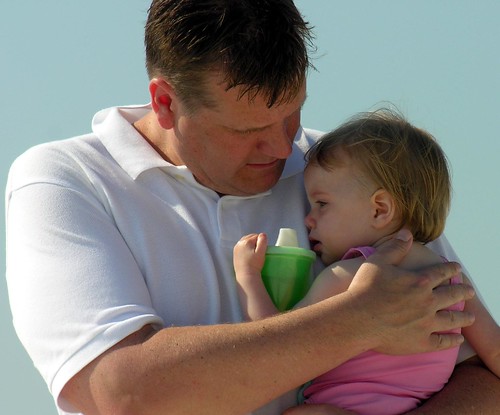
Al-Sayyid Ahmad, like any other ordinary father, wants the best for his daughters. He wants them to be protected from evil and to have a prosperous life. To bring this about, Ahmad uses his power to stimulate fear in both of his daughters, Aisha and Khadija. This fear, which has become Ahmad’s best tool to compel his daughters to respect him, has made it extremely difficult to understand why Aisha and Khadija love their father blindly. To get a better understanding of this love, I had to take into consideration their culture.
Until this point of the novel, Ahmad has proven that he is not an affectionate father. He is strict and doesn’t tolerate any approach made by any of his children to disobey his orders. It is true; most of the rules and attention in the house are directed to the boys, but this doesn’t mean that both Aisha and Khadija are being left out. Both daughters are forced to remain inside their house isolated from the rest of the world. The rules that apply to them are simply to not let any stranger see them and to learn to do the duties of the house so when marriage comes around they are prepared. When their father is around, both daughters’ heart begins to beat faster from the fear that Ahmad provokes among them. They behave like a puppy behaves when he sees his cruel master approaching. The amount of fear these girls feel towards their father cannot be compared to the love they have for him. At the end of the day, no matter what cruelties their father commits, they will continue to praise, respect, and love him.
To understand this blinded love one must take into consideration Aisha and Khadija’s culture. They are female Muslims, which means that they believe men must protect them. If they are not protected, they are considered tarts. In their culture “the role of a father in his daughter’s life is pivotal: he is the first man is her life; the one who teaches her what he, a male, thinks of her, a female; and thus shapes her sense of self-worth in the eyes of other men” (1). Ahmad has confessed to us by telling his loyal friends:
“You ask me about fathering females? It’s an evil against which we are defenseless, but let us thank God. In any case, it’s a duty. This is not to say that I don’t love my daughters. In fact, I love them as much as I do Yasin, Fahmy, and Kamal, each equally. But how can my mind be at rest when I know that I will carry them to a stranger one day. However attractive he may seem on the outside, only God knows what’s inside him. What can a weak girl do when she’s faced by a strange man far from the supervision of her father? What will her fate be if her husband divorces her one day, after her father has died? She must take refuge in her brother’s house to endure a life of neglect. I’m not afraid for any of my sons, no matter what happens to them, he’s a man and is able to confront life. But a girl… my God preserve us”. (263)
Ahmad means no harm by being strict to his daughters; he just wants to prepare them for their future. He wishes marriage wasn’t an option and that he could keep protecting his daughters, but he knows that his wish will not happen therefore all he can do is teach them to be submissive.
After reading more about the relationship between father and daughters in a Muslim community, I was able to understand why Aisha and Khadija love their father. They are aware of his cruelty, but continue to admire him. After all, thanks to Ahmad they are well respected by the rest of their community. If Ahmad shows affection, his daughters will grow weaker and will suffer the consequences once they encounter marriage.
Work cited:
(1) Zainab. "Like Father, Like Daughter." Web log post. Because Muslis matter. WordPress & Mimbo Pro, 03 Mar. 2009. Web. 24 Feb. 2010. <http://muslimmatters.org/2009/03/03/like-father-like-daughter/>.
(2) Mahfouz, Naguib. Palace Walk. New York: Anchor, 1990
(3)Photographer: Old Shoe Woman
Thursday, February 11, 2010
The Love of a Father
Question/ idea: Do you believe this father loves his children?
Since there is not much dialogue in this book yet, the characters speaking must have great importance in illustrating. This scene gives the reader a visual to the harshness of Ahmad and shows how he makes his family fear him. Mahfouz uses words like ‘might’, ‘if’, ‘would’ making it seem like this scene at breakfast happens often but also unexpectedly adding on to the father’s mysteriousness and fear. The father remains mysterious because the main point of view is from the mother’s perspective. She knows little about who he is outside the home. Her imagination satisfies her curiosity.
His mysteriousness makes it hard to tell whether he loves his children or not but that doesn’t seem to matter because his family loves him all the same. Although his father was harsh the son and mother both love him greatly. “Kamal’s small heart absorbed its love for him from this environment, but that love remained a hidden jewel, locked up inside him by fear and terror” (50). Why does his son feel such love for the tyrant. Possibly he feels the connection with being a son of such a powerful man. Asking about his son’s hands and studies shows he somewhat cares.
It seems as though everyone is like a normal family the way they express their love to one another except for their father. He seems out of place, like a stranger. In a way he is. He separates his home life from his work, late night life. The people outside his home do not know how he is at home and his family do not know how he is outside the home. Mahfouz describes, “They would cluster under their mother’s wing with love and all embracing affection. The very way they sat leaning back with their legs folded under them showed how free and relaxed they felt” (52). They appear as any family would or maybe even closer than most. The children with their mother contrast with the way they are with their father. She is gentle them to even out the effects an abusive father could leave. In the novel. there is descriptions on how much they love their family. Mahfouz wanted the reader to not get confused because although they are harsh to one another they love each other more than anything in the world. Why let there be confusion with the father? There is little description describing how much Ahmad loves his wife and kids. Kamal, the youngest, hangs on to memories when his father was gentle to him. His father didn’t stop loving him because he got older. Possibly he loved him more and knew it was time for him to be discipline. This could possibly be tradition or how his father raised him. Why is Discipline so important that he can’t express tenderness to his children? Mahfouz describes, “The truth was that he was dreaded and feared only in his own family. With everyone else-- friends, acquaintances, and customers --he was a different person” (36). He was a stranger to his family. For some reason he had to be the “Big Man” at home. This reason could be his religion. He could possibly believed it’s his right to have a subservient family and they should know their places. He would enforce this by instilling fear in their hearts.
